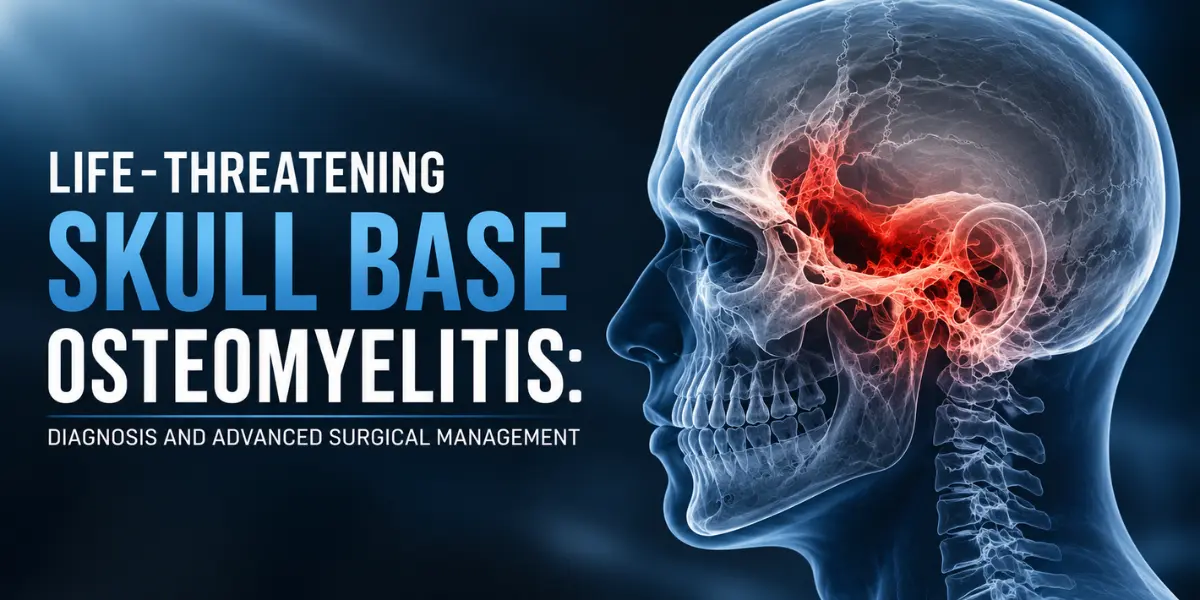
Life-Threatening Skull Base Osteomyelitis: Diagnosis and Advanced Surgical Management
Skull Base Osteomyelitis (SBO) is a rare but potentially life-threatening infection involving the bones at the base of the skull. Although uncommon, it carries significant morbidity and mortality if not recognized and treated promptly. Advances in imaging, antimicrobial therapy, and skull base surgery have considerably improved outcomes, but early diagnosis remains the key to successful management.
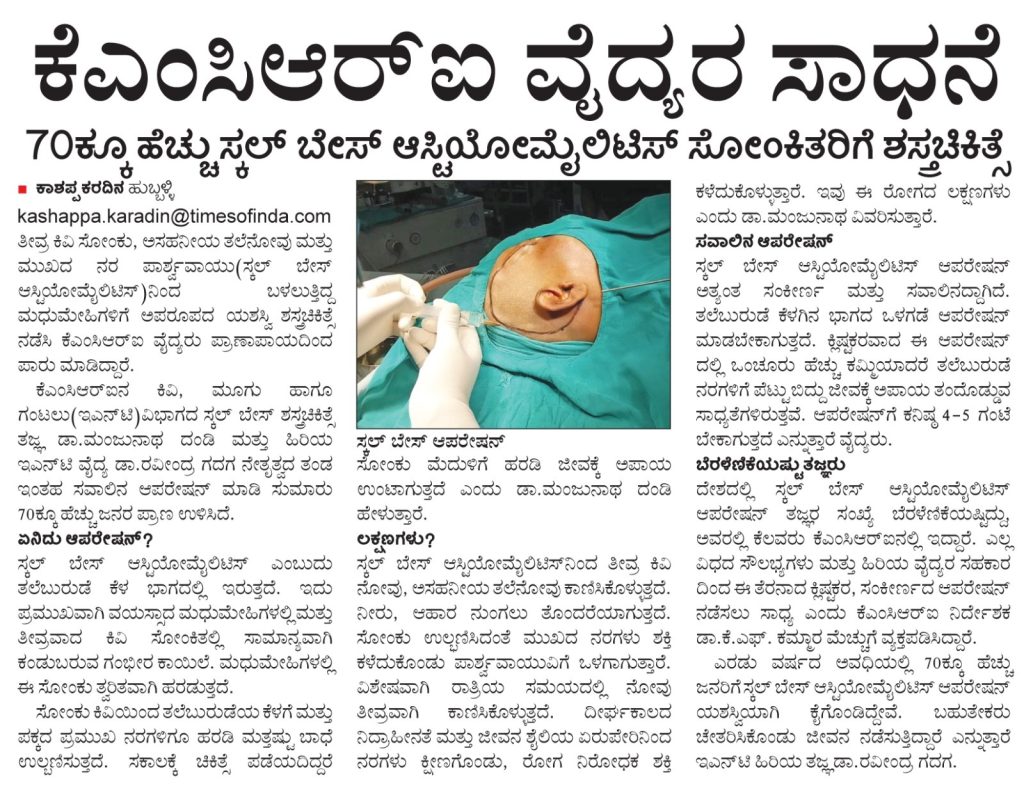
Over the past two years, our team has managed several complex cases of Skull Base Osteomyelitis, reinforcing the importance of multidisciplinary care and timely referral to specialized centers. With appropriate treatment and expert management, patients can achieve excellent infection control and improved quality of life.
What is Skull Base Osteomyelitis?
Skull Base Osteomyelitis is a severe infection of the bones at the base of the skull. It most commonly develops as a complication of malignant (necrotizing) otitis externa or chronic ear infections. If left untreated, the infection can spread from the ear to the skull base and surrounding vital structures, making it a potentially life-threatening condition.
Because the skull base contains important nerves, blood vessels, and structures that control essential body functions, prompt diagnosis and treatment are critical to prevent serious complications.
Who is at Risk?
Although Skull Base Osteomyelitis is rare, certain groups of people are more susceptible to developing the condition. Individuals at higher risk include:
- Elderly individuals
- Patients with diabetes
- Immunocompromised patients
- People with chronic ear infections
- Patients who have undergone previous ear surgery
- Individuals with poor immune function
Patients with these risk factors should seek medical attention if they develop persistent ear pain or discharge.
Symptoms of Skull Base Osteomyelitis
Symptoms of Skull Base Osteomyelitis typically develop gradually and worsen as the disease progresses. Early recognition of these warning signs is essential for successful treatment.
Common symptoms include:
- Persistent severe ear pain, especially at night
- Ear discharge
- Headache
- Hearing loss
- Facial weakness
- Difficulty swallowing
- Hoarseness of voice
- Multiple cranial nerve palsies in advanced disease
Persistent symptoms that do not improve with routine treatment should always be evaluated by an ENT specialist.
Why is Skull Base Osteomyelitis Dangerous?
Skull Base Osteomyelitis is much more serious than a routine ear infection. Without timely treatment, the infection can spread to involve cranial nerves, major blood vessels, and intracranial structures.
Serious complications may include:
- Facial paralysis
- Brain infection
- Stroke
- Sepsis
- Multiple cranial nerve involvement
- Life-threatening neurological complications
- Death
These potentially severe outcomes highlight the importance of early diagnosis and immediate medical intervention.
How is Skull Base Osteomyelitis Diagnosed?
Accurate diagnosis involves a thorough clinical assessment supported by advanced imaging techniques and laboratory investigations.
The diagnostic process may include:
- Clinical examination
- Ear and nasal endoscopy
- CT scan
- MRI scan
- Selected nuclear medicine scans
- Blood tests
- Microbiological cultures
These investigations help determine the extent of infection, identify the responsible organism, and guide appropriate treatment.
Treatment Options
Most patients respond well to prolonged culture-directed antibiotic therapy when the infection is diagnosed early.
Treatment typically includes:
- Prolonged culture-directed antibiotics
- Good diabetic control
- Effective pain management
- Regular follow-up to monitor recovery
A multidisciplinary approach involving ENT specialists, radiologists, infectious disease experts, and other healthcare professionals plays a vital role in achieving successful outcomes.
When is Surgery Needed?
Although medical therapy is effective for many patients, surgery may become necessary in selected cases.
Surgical treatment is considered when there is:
- Persistent infection despite antibiotic treatment
- Abscess formation
- Progressive bone destruction
- Cranial nerve involvement
- Failure of medical therapy
The primary goal of surgery is to remove infected tissue, control the spread of infection, and improve the effectiveness of ongoing medical treatment.
Advanced Skull Base Surgery
In complex or advanced cases, specialized skull base surgical procedures may be required.
These may include:
- Mastoid surgery
- Surgical debridement
- Drainage procedures
- Advanced lateral skull base approaches
- Infratemporal fossa procedures
Such highly specialized procedures should be performed only in experienced centers with expertise in advanced skull base surgery and multidisciplinary patient care.
Outcomes
With early diagnosis, appropriate antibiotics, multidisciplinary care, and carefully selected surgical treatment, many patients experience:
- Significant pain relief
- Effective infection control
- Prevention of disease progression
- Improved quality of life
Early intervention greatly improves the chances of recovery while reducing the risk of serious complications.
Prevention
Although Skull Base Osteomyelitis cannot always be prevented, several measures can reduce the risk of developing this condition:
- Maintain good diabetic control.
- Treat ear infections promptly.
- Avoid inserting objects into the ear.
- Seek specialist care for persistent ear pain.
- Attend regular follow-up appointments if symptoms persist.
Preventive care and timely medical attention remain the best strategies for avoiding severe complications.
Conclusion
Persistent ear pain, particularly in diabetic individuals, should never be ignored. Skull Base Osteomyelitis is a rare but serious infection that requires early diagnosis, prompt treatment, and expert multidisciplinary care. Advances in imaging, prolonged culture-directed antibiotic therapy, and specialized surgical techniques have significantly improved patient outcomes, but timely referral remains the key to preventing life-threatening complications.
If you or a loved one experiences persistent ear pain, ear discharge, facial weakness, or other concerning symptoms, seek expert evaluation without delay. At Dandi Advanced ENT Clinic, we provide comprehensive evaluation and advanced treatment for complex ear and skull base disorders, including specialized skull base surgery. As a trusted ENT Clinic in Hubli, we are committed to providing timely diagnosis, advanced treatment, and compassionate care to help patients achieve the best possible outcomes.